

,
The Impact of Speed Differentials Between Trucks and Cars on I-81
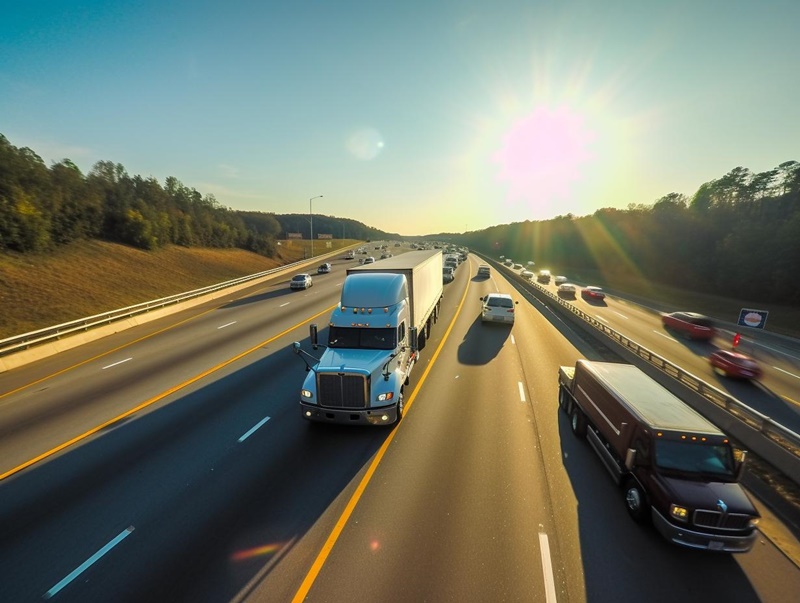

Interstate 81 (I-81) is one of those highways where you can feel the freight economy moving. For everyday drivers, that steady truck presence changes how the road behaves. You are sharing lanes with vehicles that often travel at different speeds, accelerate differently, and need far more room to stop.
Those differences create what safety researchers call a “speed differential.” When that gap grows, lane changes multiply, braking waves form faster, and small mistakes cascade into serious crashes. The Federal Highway Administration (FHWA) research has long shown that crash risk rises when vehicles are traveling well above or below the average traffic speed.
This post explains why truck versus car speed on I-81 issues matter, where they show up most, and what drivers and policymakers can do to reduce risk.
Why Speed Differentials Matter More Than People Think
Most drivers focus on top speed, but differentials are about relative speed. If traffic is flowing smoothly at one speed, the whole system is stable. When one chunk of traffic is moving much faster or slower than the rest, stability fades.
On I-81, trucks often become moving speed anchors on hills. Cars stack behind them, then swing left to pass. Meanwhile, a second truck might be overtaking the first at only a 2–3 mph difference, turning two lanes into a pinch point. What starts as normal passing becomes a weaving puzzle.
Speed differentials also shorten decision time. A car approaching a slow truck has to judge the closing distance quickly. If the driver is distracted or caught in low visibility, they may not brake or merge early enough. That’s how rear-ends, sideswipes, and multi-vehicle pileups start.
How I-81’s Terrain And Traffic Amplify The Gap

Interstate 81 isn’t flat. The highway runs through long Appalachian valleys with repeated climbs and descents. A fully loaded semi that holds 65 on level ground may slip to 50 on an uphill pull. Then, on the downhill side, it can surge faster than the cars that hesitated behind it.
Traffic mix matters too. This Interstate is a preferred north-south trucking route, so you have clusters. Those clusters create platoons of slower-accelerating vehicles. When cars hit those platoons, they either slow down with them or try to leapfrog around them in bursts. Both behaviors raise conflict.
Weather adds another layer. Passenger cars might maintain speed while trucks ease off to protect traction and braking. That widens the closing gap. In other words, the road just needs a steady mismatch to be dangerous.
Where Speed Differential Safety Highway Risks Are Highest On I-81
Problems tend to show up in predictable patterns. These are the I-81 settings where speed gaps between trucks and cars most often turn into crashes:
- Uphill grade corridors.
- Downhill approaches into towns.
- Truck-dense passing zones.
- Interchange clusters near cities
- Construction or lane-narrowing areas
- Fog-prone valleys and winter stretches
These spots are basically the “stress test labs” for speed differentials. If you drive I-81 regularly, you’ve likely felt at least one of these play out around you.
Crash Patterns That Come Straight From Speed Gaps
Once a speed differential forms, the crashes it creates are pretty consistent. Rear-end collisions happen when a car closes on a slower truck without enough space to brake or merge. The higher the differential, the harsher the impact. Sideswipes and run-offs happen when drivers change lanes quickly to pass, then get surprised by another vehicle already occupying that lane.
Another common interstate pattern is the “accordion wave.” Cars stack behind a slow truck, then surge left to pass, forcing the left lane to slow. That slowdown bounces backward through traffic, creating a series of sudden brakes.
And while trucks are often the “slow stream,” cars can be the slow ones, too. A passenger vehicle crawling in the right lane during snow or heavy rain can become a hazard when surrounding traffic is still moving fast. The mismatch is what matters.
What Drivers Can Do To Shrink Risk In Real Time
You can’t control the speed of trucks climbing a hill, but you can control how you approach them. The basic rule is to treat speed gaps like warning signs, not inconveniences. If you see a truck slowing on a grade, anticipate it early. Ease off the throttle before you’re on its bumper. Signal and merge smoothly if you’re passing.
When you do pass, pass decisively. Hanging in a truck’s blind spot while traffic compresses is one of the most dangerous things drivers do on I-81. If it’s not safe to pass, it’s safer to settle into a buffer behind the truck and wait for a cleaner opening than to force the issue in a tight lane window. Also, do a quick takeaway: If you notice speed gaps growing, create space first, then make lane moves slowly and clearly.
That single habit prevents a surprising number of speed-differential crashes because it restores reaction time.
Policy And Enforcement Angles Worth Considering
There’s a long-running debate about whether different posted speed limits for trucks and cars help or hurt. FHWA’s research on differential speed limits shows mixed results, but also emphasizes a core point: higher speed variance increases vehicle interactions, and interactions increase crash opportunity.
For I-81, the policy question is about managing variance. Some states focus on targeted enforcement on steep grades and truck-dense corridors. Others invest in climbing lanes, wider shoulders, or improved interchange geometry to reduce forced lane changes.
From a driver’s perspective, the practical result should be a more predictable highway. Every measure that reduces sudden speed gaps reduces crash risk.
Keeping I-81 Predictable
Speed differentials are a quiet threat on I-81. A truck climbing a grade isn’t doing anything wrong. A car passing by isn’t either. The danger comes from how quickly those two speeds collide in the same small space.
The safest mindset is to treat I-81 like a moving system, not a personal lane. When you see speeds separating, expect lane changes, expect braking waves, and give yourself extra time to react.
If you or someone you know has been injured in a crash involving speed differentials or heavy truck traffic on I-81, we can connect you with an I-81 car and truck accident attorney.
Accidents currently listed on i81accidents.com
28 accidents in 2022
107 accidents in 2022
2 accidents in 2022